Hapsburg Import Absinthe - Devilishly Sophisticated

Absinthe History

February 19th, 2010

There is evidence that the ancient Greeks and ancient Egyptians used wormwood for medical purposes and even enjoyed a wormwood flavoured wine, however the absinthe that we drink today began its life in the 1800’s. The exact origins are sightly muddled. Certainly a Swiss physician named Dr Pierre Ordinaire played a part in the promotion of this drink when he began prescribing it as a “fix-all” elixir to his patients in 1792, but it is not certain that he actually “invented” the drink himself. Some accounts state his brand new elixer was passed onto the Henriod Sisters who began selling it as a medicinal aid, whilst other accounts insist the Henriod Sisters were already making and selling the elixir before Dr Pierre Ordinaire became involved.

Either way, in 1797 Major Dubied acquired the formula from the Henriod Sisters and together with his son Marcellin and his son-in-law Henri-Louis Pernod opened the very first absinthe distillery in Couvet, Switzerland. To keep up with increasing demand, a second distillery was opened in 1805, this time in Pontarlier, France. Absinthe continued to grow in popularity, particularly in France where 5pm became “L’heure verte” or the Green Hour. Every social class enjoyed it from the wealthy to the working class, and in particular it became synonymous with the Parisian bohemian lifestyle. Oscar Wilde was a keen drinker of absinthe.

By 1880, there were many distilleries throughout France and Europe so the price dropped dramatically. This increased consumption yet further until around 36 million litres a year were being drunk throughout France. The immense popularity of absinthe spread to other parts of the world such as the Czech Republic, the US (in particular New Orleans) and Spain. It was towards the end of the 19th Century that things began to go downhill for absinthe. Critics of the drink, in particular winemakers accused the drink of causing diseases and illness such as tuberculosis and epilepsy. It was also cited as the cause of crime and violence however there was little evidence to prove either of these claims. In the 1900’s absinthe was banned in most European countries and the US. The Penod distillery continued to produce absinthe in Spain where it was still legal, however very slow sales led to its eventual collapse in the 1960’s.

Absinthe has since had its ban lifted across the world and has undergone a huge revival. Hapsburg Absinthe in particular is a hugely popular brand and an increasing number of people in all parts of the world are choosing it as their preferred drink.

Absinthe Cocktails

February 4th, 2010

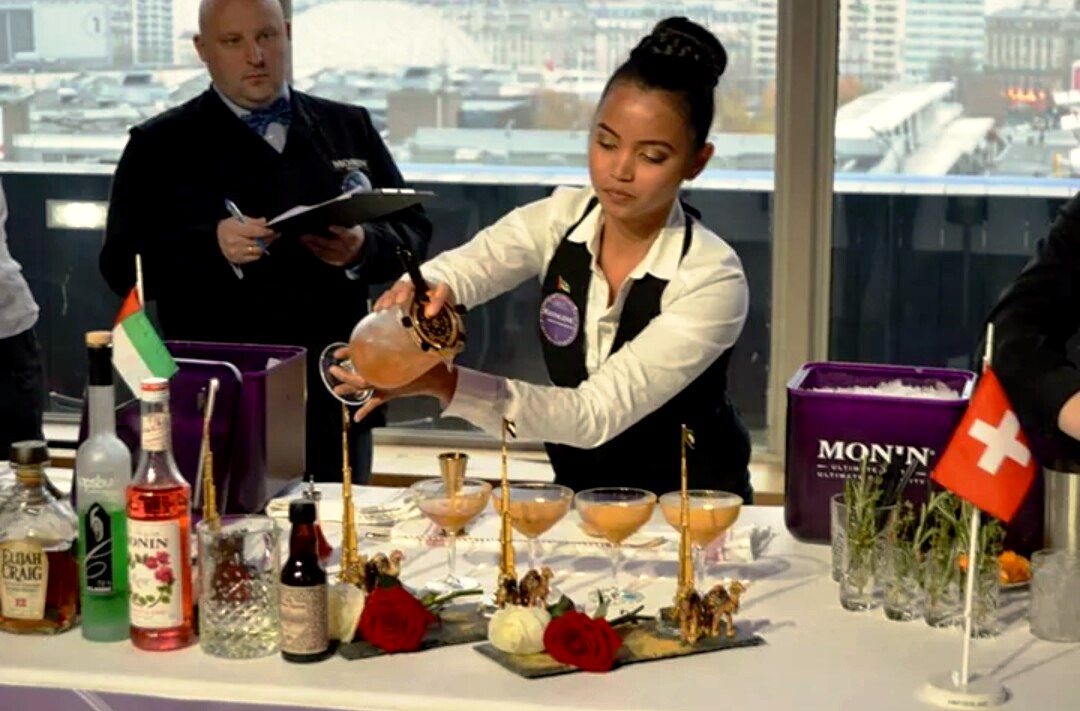
Aside the traditional way of drinking Absinthe where water is dripped in through a spoon or from a fountain until the solution has turned cloudy, there are several other ways the drinks can be enjoyed. Bartenders have been making cocktails with absinthe and its fennel/liqourie/anise flavour for many years. In the absence of absinthe a substitute such as pernod would have been used. Because of its potency and high alcohol content, sometimes just a rinse of absinthe is required on the glass. A dash of absinthe will be added to the glass, swirled around but then discarded. That way the cocktail benefits from the rich flavour of absinthe, without the potency.

Do you like the sound of “Death in the Afternoon”? This cocktail was developed by none other than Hemingway himself who contributed it to a cocktail recipe book in 1935.  The cocktail calls for a measure of absinthe in a champagne glass with champagne then dripped onto it slowly until it turns cloudy. In other words champagne is used to replace the water that was traditionally added via a fountain or through a spoon. Hemingway also noted that pouring the absinthe on top created an unusual visual effect. Offer up some Hapsburg Absinthe in this way at your next social occasion to really bring the party to life!

Taken from the Savoy Cocktail Book, the Chrysanthemum Cocktail comprises Dry Vermouth, Absinthe and a liqueur called Benedictine. The flavours ‘gel’ remarkably well in this drink to produce a herb infused treat for the tastebuds! Alternatively, for those who enjoy a little snifter at breakfast, the Absinthe Suissesse is the drink for you.  It has a milkshake texture through the addition of egg white and cream and is enjoyed throughout New Orleans as a breakfast drink. An almond flavoured syrup is also included in the Absinthe Suissesse.

Hapsburg Absinthe is second to none in terms of flavour and all of these cocktails and many more besides can be made with this lively spirit. Steeped in tradition and ritual, Absinthe is truly more than just simply a drink, and Hapsburg Absinthe is the very best available.

How to Drink Absinthe

January 26th, 2010

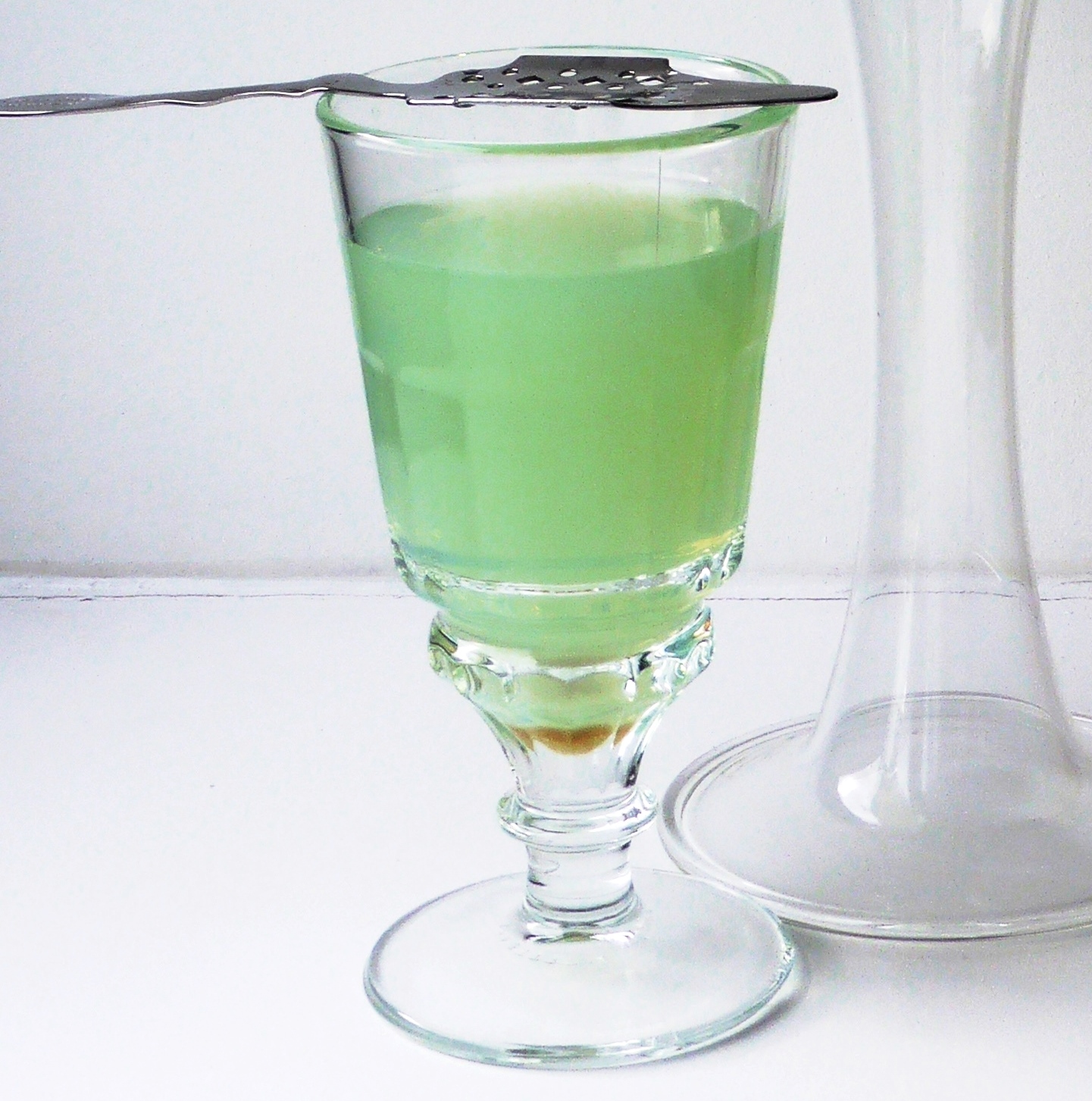
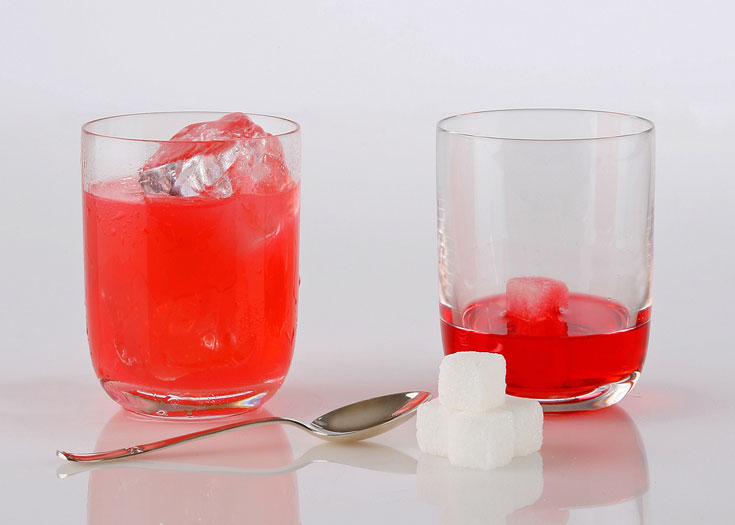
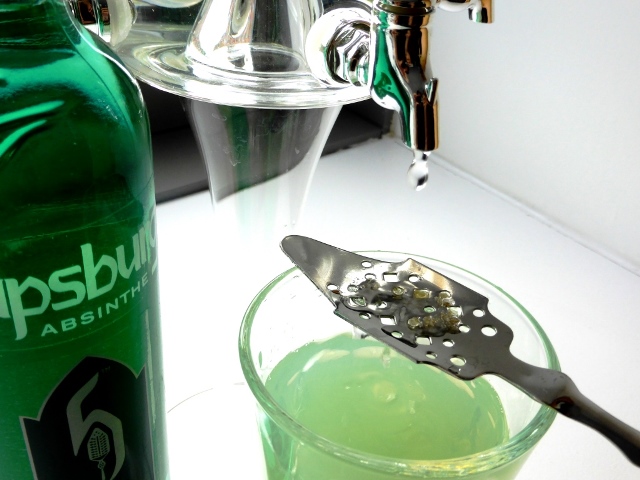
Absinthe has a very high alcohol content, and because of this the spirit is traditionally diluted substantially with water before consuming, often to a ratio of 3:1 or perhaps even more, according to taste. There are ancient rituals and traditions associated with the addition of water to absinthe but the latter day theatre of dousing a sugar cube with the spirit and setting it alight is a recent import from Czech Republic and is not to be encouraged, as fire and highly volatile strong spirits are a dangerous combination! Other modern day traditions include placing a sugar cube on an absinthe spoon and dripping water over it into the glass beneath until the cube has dissolved completely. The absinthe spoon is then used as a stirrer to give the drink a final mix before consuming.

When water is added to Absinthe, the lurid green colour of the drink changes into a cloudy, opalescent white before your very eyes. This only happens however when water is added drip by drip, as otherwise the oils found within the drink prevent the drink from mixing correctly. The original way to serve absinthe was to very slowly drip iced-water from a four- tapped receptacle (une fontaine) into a glass filled with a measure of the spirit. Because of the number of taps, several drinks could be prepared at the same time. The glasses would sit beneath the taps from which the iced-water would be dispensed.

The term used to describe the changing colour of Absinthe is “louche”, and a poor louche indicates a poor quality of drink. The louche is the most important ritual involved in the drinking of Absinthe, and of course it is very enjoyable to watch. Hapsburg Absinthe provides a dramatic visual show when water is added, magically changing from green to white as the drips start being added. There have been a number of apparatus designed specifically to enhance the enjoyment of the louche for the spectator. Water fountains and specially designed carafes that are held high above the glass when pouring the water are just a couple of examples. Hapsburg Absinthe is even more enjoyable when traditions and rituals are added into the mix!

What is Absinthe?

January 26th, 2010

Absinthe is a highly alcoholic drink (45% – 75% ABV) that is believed to have originated in Switzerland around the eighteenth century. It is mixed with water generally before drinking in order to dilute it, and during this process changes from its natural lurid green colour to an opalescent white.

It is made from wormwood (Artemisia Ansinthium) from which the name derives and a variety of other herbs such as Green Anise (Pimpinella Anisum) Florence Fenel (Foeniculum Vulgare) and sometimes licorice, star anise, lemon balm and even coriander, depending on where it is being made.

There are frequent references to this potent drink in the history books where it is more usually called the “Green Fairy.” It was very popular in France during the late nineteenth century and early twentieth century where it was consumed in large amounts by Parisian artists and writers in particular. There was a strong association between absinthe and the Bohemian culture in Paris. It is said that Oscar Wilde, Van Gogh and a whole range of other notorious “bad boys” of the day were great fans of the drink.

Sometimes Absinthe is incorrectly referred to as a “liqueur” however because it is not low-alcohol and because there is no sugar contained within the drink, it is in fact a spirit. It is also traditionally drunk as an aperitif (before dinner) which also separates it from liqueurs which are generally served after dinner (digestif).

The immense popularity of this drink died away during the twentieth century, but is now back with a vengeance. There are around 200 brands of absinthe produced across the globe as of 2008. France, Switzerland, Spain and the Czech Republic in particular manufacture great quantities for distribution each year. It has a very distinctive taste and smell and enjoyed the world over.